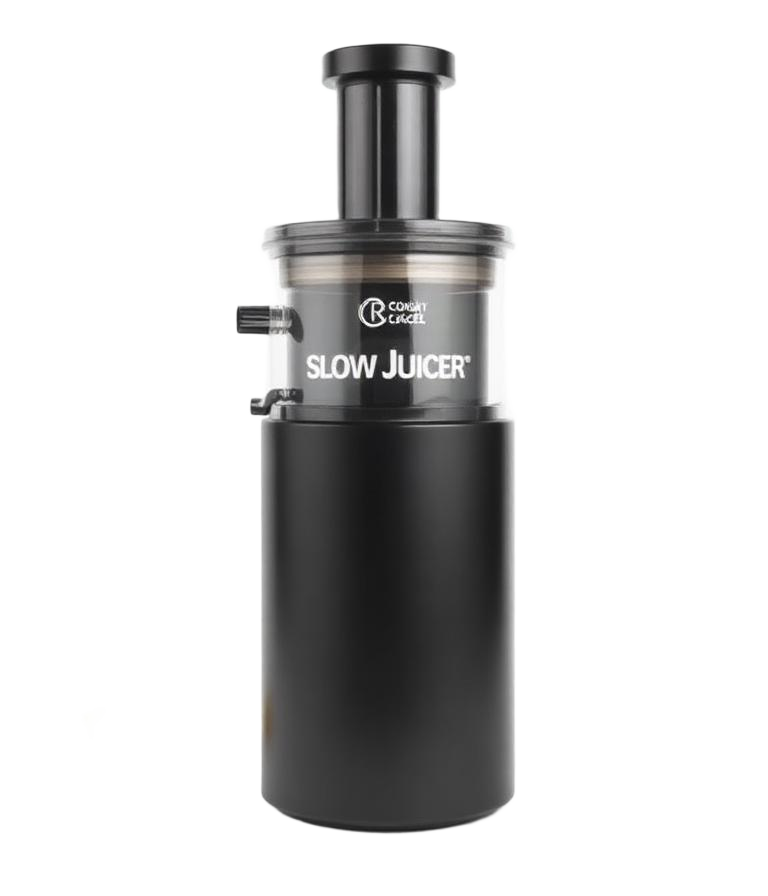
Hurom H80 Slow Juicer
Pros
- 2-liter self-feeding hopper with a larger inlet, so you keep adding produce while it runs
- Spiral Blade in the hopper keeps kale and celery moving instead of clogging
- 50 RPM slow squeeze designed for low-pulp juice and dry pulp
- Three strainers in the box: fine for juice, coarse for smoothies and thicker juice, ice cream for sorbet
- Dishwasher-safe components
- Quiet 150-watt AC motor
- BPA-free, made in South Korea
- 15-year warranty on motor and parts
Cons
- $749
- About 18 inches tall, so measure under your cabinets
- Big pits, peaches and plums, have to come out before juicing
The H400 won the last version of this guide, and the H80 is the next machine out of that same family. What it addresses is the step that used to need babysitting, which is feeding.
The two-liter hopper matters if you make juice for more than one person. It feeds the produce for you, and the wider inlet lets you top it up as it runs. That's the kind of convenience I'd put ahead of an extra attachment, because it's the difference between standing at the counter for the whole run and getting on with your morning.
The Spiral Blade is the new part. It sits up in the hopper and is designed to keep fibrous produce moving down into the auger. Kale and celery are the two ingredients most likely to stall a slow juicer. If kale and celery are regular ingredients for you, that is a feature worth looking at.
For juice quality, I look at the strainer options as well as the pressing system. The fine strainer is for everyday juice, the coarse one for a thicker vegetable juice or smoothie base, and the ice cream strainer for softened frozen fruit. That's useful versatility if you'll actually use the extras.
Cleanup is where I'd say it separates from the Kuvings. Hurom lists the components as dishwasher safe, and that single line changes the daily math more than any spec on the box. A juicer you dread washing is a juicer you stop using. Of these five, it's the only one whose cleaning story has no "but" attached.
Price is the argument against it. At $749 it costs about what the Kuvings AUTO10 Plus costs and more than everything else here, so if that number is the problem, skip down to the Canoly.